
 Track Your Shipment
 Online Enquiry
 Sign In
 English
 Alfares Cargo
 Logistic Informations
 2026-07-01
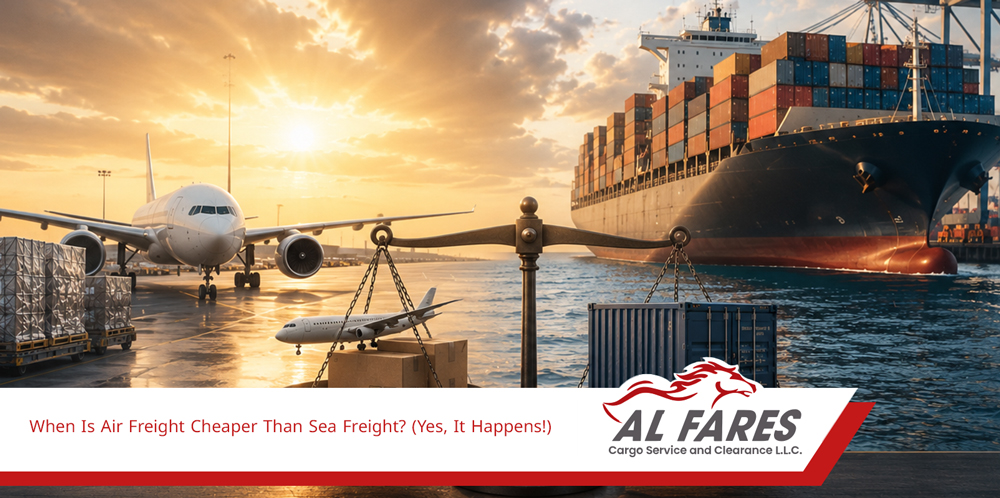
For many years, the common belief in international trade was that sea freight is always the cheapest option, while air freight is seen as the faster but more expensive alternative. However, this concept has changed significantly in recent years, especially with the ongoing shifts in the global logistics industry.
Disruptions in shipping routes, rising marine insurance costs, and extended transit times due to vessel rerouting have reshaped the equation. In many cases today, air freight is not only competitive but can actually be cheaper than sea freight.
When Air Freight Is Actually Cheaper Than Sea Freight
Although sea freight remains the traditional low-cost option, current market conditions have revealed specific scenarios where air freight can be more cost-effective:

1. Small to Medium Shipments (LCL)
When cargo is shipped as Less than Container Load (LCL), it is subject to multiple additional charges, including:
- Consolidation fees
- Destination deconsolidation charges
- Handling fees
- Long waiting times at ports
With these costs rising, it’s now common for air freight to be 10–25% cheaper than LCL sea freight in certain cases.
2. High-Value or Sensitive Goods
High-value or sensitive items such as electronics, spare parts, and samples require higher marine insurance especially amid increasing maritime risks.
In many situations, when calculating value + risk + time, air freight becomes the more economical option.
3. Remote or Indirect Shipping Destinations
Some shipments require multiple sea transits through different ports, increasing both cost and delivery time.
If the destination is not well-served by direct shipping lines, air freight often becomes cheaper thanks to direct or near-direct flight routes.
4. High Container Rates or Seasonal Shortages
During peak seasons (holidays, high-demand periods), container prices can surge dramatically.
In some cases, the cost of a 20-foot container can exceed the cost of air freight for certain cargo volumes. Additionally, container shortages lead to long waiting times, which indirectly increase total costs.
Factors Making Air Freight More Competitive Today
The global shipping market has undergone major transformations, making air freight more economically viable than ever before. Key factors include:
1. Expansion of Gulf Airlines’ Cargo Fleets
Several Gulf-based airlines have expanded cargo operations, resulting in:
- Increased cargo capacity
- Stronger market competition
- Noticeable reduction in air freight rates
This has made air freight more flexible and affordable, especially for routes to the Gulf, Europe, and Africa.
2. Rising Marine Insurance Costs
Marine insurance premiums have increased by 30–70% due to geopolitical risks affecting shipping routes.
In contrast, air freight insurance remains relatively stable and lower.
3. Port Congestion and Delays
Delays at ports have become a hidden cost factor, including:
- Storage fees
- Waiting charges
- Demurrage penalties
- Repeated handling costs
These additional expenses often make sea freight more expensive than initially expected.
4. Greater Flexibility in Air Freight
Air freight offers superior flexibility in:
- Flight frequency options
- Direct access to inland destinations without sea transit
This flexibility often translates into lower overall costs, especially for time-sensitive shipments.
5. Increased Use of Technology in Logistics
With the adoption of AI and advanced logistics systems, comparing shipping options has become more precise.
These tools have revealed many cases where air freight is actually more cost-effective than sea freight.
Practical Tips to Choose the Cheaper Shipping Option
Choosing between air and sea freight today requires more than just comparing base prices. Here are key tips:

1. Calculate Total Cost, Not Just Freight Cost
The biggest mistake is comparing shipping rates only. The real cost includes:
- Port handling charges
- Storage fees
- Customs clearance
- Insurance
- Delay-related costs
In many cases, sea freight appears cheaper but ends up costing more overall.
2. Evaluate Shipment Size and Weight
- Shipments between 100–500 kg are often cheaper by air
- Very heavy or bulky cargo remains more suitable for sea freight
3. Consider Time Sensitivity
If delays could cause business loss, missed seasons, or operational disruption, air freight becomes the more economical choice.
For example, shipping seasonal goods (like Ramadan or holiday items) late by sea may result in financial loss.
4. Monitor Market Conditions
Sea freight rates can fluctuate weekly, especially during crises.
Air freight pricing, on the other hand, tends to be more stable and negotiable.
5. Assess Insurance and Risk Costs
Marine insurance costs have risen significantly due to geopolitical risks, while air freight insurance remains relatively lower and faster to process.
6. Compare Transit Time Impact
Sea freight delays may result in:
- Demurrage charges
- Higher storage costs
- Lost sales opportunities
Time is a critical economic factor that should not be overlooked.
7. Consult a Professional Shipping Company
Avoid relying on outdated assumptions. The logistics market changes daily.
A professional company can provide a clear comparison based on real data.
At Al Fares Cargo, we offer a free consultation service to help you determine the most cost-effective option. Our detailed report includes:
- Air freight cost
- Sea freight cost
- Estimated transit time
- Insurance costs
- Additional charges
- Final recommendation based on real market data
Final Thoughts
In today’s dynamic logistics landscape, choosing between air and sea freight is no longer a straightforward decision.
With its expertise in both air and sea freight, combined with advanced analysis tools, Al Fares Cargo plays a key role in helping clients select the most efficient and cost-effective shipping solution tailored to their specific needs and market conditions.