

 Track Your Shipment
 Online Enquiry
 Sign In
 English
Blog
Shipping services and information

Shipping from India to Syria
India is considered one of the largest industrial and commercial countries in the world. With its vast production base, it has become an important market for Syrian importers seeking to meet their commercial and industrial needs.
 Logistic Informations
 2026-07-29

Shipping from the UAE to Aqaba Port .. A Strategic Gateway for Regional Trade
Aqaba Port is one of the most important ports in the Middle East, as it represents the only maritime gateway for the Hashemite Kingdom of Jordan on the Red Sea. Located in the city of Aqaba in southern Jordan, the port enjoys a strategic location that connects Asia, Africa, and Europe through international shipping routes in the Red Sea.
Logistic Informations
2026-07-18

Sea Freight Solutions from China to Syria .. From Booking to Customs Clearance
the sea freight sector is witnessing rapid changes due to regional and international developments, particularly the disruptions in the Red Sea and the rising costs of transportation and marine insurance.
Logistic Informations
2026-07-18

Air Freight for Luxury, Sports, and Rare Cars… A Service Designed for the Elite
Shipping luxury cars is fundamentally different from conventional vehicle transportation. Handling a sports car, a rare classic, or a high-value vehicle requires extremely precise standards in handling, packaging, protection, and logistics clearance.
Car Shipping
2026-07-14

What Is the TIR System, and Why Has It Become Essential for Land Freight Companies?
In recent years, the freight and logistics sector has witnessed major and unprecedented transformations, prompting transport companies around the world to rethink the way they manage supply chains and the movement of goods across borders.
Logistic Informations
2026-07-09
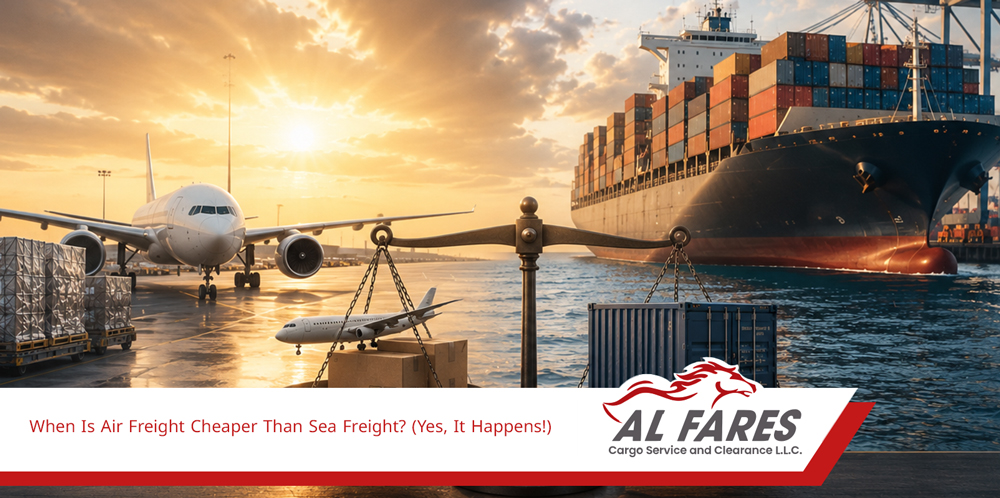
When Is Air Freight Cheaper Than Sea Freight? (Yes, It Happens!)
For many years, the common belief in international trade was that sea freight is always the cheapest option, while air freight is seen as the faster but more expensive alternative.
Logistic Informations
2026-07-01

What is FIATA? And Why is It Considered a Global Standard in Shipping?
FIATA is one of the most prominent international organizations representing the global freight forwarding and logistics sector. It works to regulate and develop the freight forwarding profession according to international standards that facilitate global trade.
Logistic Informations
2026-06-29

Is Road Freight Making a Strong Comeback in the Middle East?
road freight in the Middle East is once again stepping into the spotlight this time not as a limited traditional option, but as a strategic alternative gaining serious reconsideration.
Logistic Informations
2026-06-22

Road Freight Through Syrian Territory - The Return of a Strategic Trade Corridor from Turkey to Jordan and the Gulf
Today, with recent regional developments and renewed coordination among the countries involved, signs of revival for this land corridor are beginning to emerge. Its return marks a strategic turning point
Logistic Informations
2026-06-08

Car Storage Services for Short and Long Periods
Car storage services have become an essential logistical solution, especially in major cities like Dubai, where travel and commercial activity are constantly growing. With rapid economic development, urban expansion, and increasing numbers of residents and visitors, the need for secure and organized vehicle
Logistic Informations
2026-06-03

Shipping from Dubai to Slovenia
In this article, we explore the most common shipping methods, key ports and airports involved in logistics operations, and the main advantages that make Dubai an ideal gateway to Slovenia along with how importers can benefit from the available shipping services.
Some Of Our Shipping Destinations
2026-06-01

Contact Us Today and Get a Free Shipping Consultation
. It is not just a quick conversation, it is a professional consultation session designed to help you understand the best shipping options available for your cargo, ensuring higher efficiency, lower costs, and on-time delivery without delays or complications.
Logistic Informations
2026-05-17

