
 Track Your Shipment
 Online Enquiry
 Sign In
 English
 Alfares Cargo
 Some Of Our Shipping Destinations
 2026-04-14
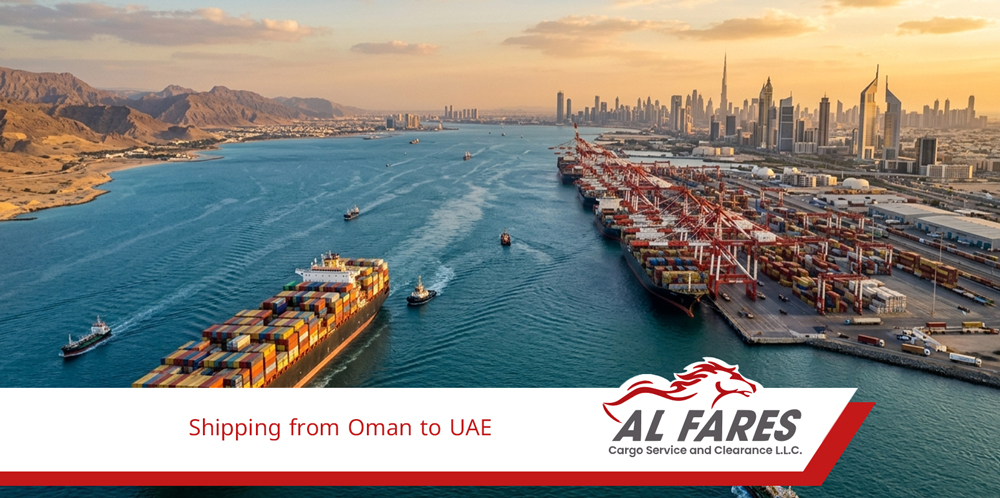
Land freight between the Sultanate of Oman and the United Arab Emirates is considered one of the most vital logistics corridors in the Gulf region. This is driven by the strong economic and trade relations between the two countries, as well as their geographic proximity, which makes road transport the most efficient option in many cases.
With the growing volume of trade across Gulf markets, this route has become a key artery for the movement of goods, commodities, and essential materials between Omani ports and UAE markets—whether for local consumption or re-export to other regional destinations.
Today, the importance of this route is increasing even further due to the current geopolitical and logistical shifts in the Gulf. These changes have impacted some traditional maritime routes, particularly with increasing pressure on sensitive shipping lanes. As a result, many companies and importers are actively seeking more flexible and secure alternatives.
In this context, road freight via Oman to the UAE has emerged as a strategic solution—offering speed, reliability, and adaptability during disruptions. Recent data also confirms that Oman has enhanced its land transport readiness, providing customs and logistics facilitation to ensure smooth cargo flow into GCC markets, including the UAE.
Importance of Road Freight Between Oman and the UAE
The significance of land transport between Oman and the UAE lies in its role as a direct logistics bridge connecting Omani ports with UAE markets, ensuring fast and secure cargo movement.

Due to the close geographic proximity, road freight has become the preferred option for many businesses especially for shipments requiring:
- Fast delivery
- Cost efficiency
- Operational flexibility
This importance has grown significantly under current regional conditions, where pressure on traditional sea routes has made land corridors more reliable than ever.
A major boost to this route has been the implementation of the Green Customs Corridor between Dubai and Oman. This initiative has accelerated the movement of shipments redirected through Omani ports and transported by land to the UAE, ensuring continuity in trade and minimizing supply chain delays.
Additionally, this route plays a direct role in strengthening Gulf economic integration. Oman offers strategic ports such as Sohar, Salalah, and Duqm, while the UAE serves as a regional hub for re-export and distribution. The land connection between them is therefore a critical factor in sustaining intra-GCC trade and supplying regional markets.
Infrastructure and Transport Routes
The efficiency of land freight between Oman and the UAE is built upon a strong and continuously developing infrastructure. Over recent years, both countries have invested heavily in highways, border crossings, and logistics zones linked to major ports.
Under current Gulf conditions, this infrastructure has become even more important as a flexible alternative for cargo redirected through Omani ports and transported overland to the UAE.
The activation of the Green Customs Corridor has significantly improved connectivity and accelerated cargo movement across land routes.
Key Border Crossings
- Al Wajajah – Hatta Border: One of the main commercial crossings for trucks
- Khatmat Malaha Border: Serves cargo movement between Northern Oman and the UAE
- Wum Border (Fujairah): Recently expanded to increase capacity
These crossings are directly connected to major highways linking economic hubs such as Dubai, Abu Dhabi, Sohar, and Muscat, enabling fast delivery to warehouses and distribution centers.
Main Land Routes
- Sohar – Al Buraimi – Al Ain – Dubai
- Muscat – Sohar – Al Wajajah – Dubai
- Salalah – Duqm – Sohar – UAE (for southern Oman shipments)
These routes play a crucial role in directly connecting Omani ports such as Sohar, Salalah, and Duqm to UAE markets. This integration supports multimodal transport, a growing logistics trend in the Gulf region.
Future railway connectivity between Oman and the UAE is also expected to further strengthen this logistics corridor.
Customs Procedures and Clearance
Customs clearance is one of the most critical stages in the land freight process, as it directly impacts delivery speed, cost, and supply chain continuity.
In response to current regional conditions, customs authorities in both Oman and the UAE have taken steps to simplify procedures and accelerate processing especially for shipments rerouted via Omani ports.
The Green Customs Corridor has played a key role in reducing clearance times and minimizing delays associated with repeated inspections.
Required Documents
- Commercial Invoice
- Packing List
- Land Bill of Lading
- Certificate of Origin
- Special permits (for restricted goods such as pharmaceuticals or chemicals)
Clearance Process
- Pre-submission of shipment data electronically
- Document verification and cargo matching
- Duty calculation or exemption assessment
- Inspection (if required)
- Release and delivery to final destination
Digital transformation and system integration between Omani and UAE customs have significantly improved efficiency through:
- Real-time data exchange
- Automated truck recognition
- Reduced human error
- Faster processing at high-volume crossings
Benefits of Digital Customs Systems
- Reduced border waiting times
- Lower paperwork errors
- Faster duty calculation
- Improved shipment tracking
- Support for priority (green corridor) shipments
However, certain goods still require additional approvals or inspections, such as:
- Food products
- Electronics
- Medical supplies
- Dual-use items
To read Why Al-Fares in Customs Clearance? click here.
And to read more about land freight click here.
Key Tips for Shipping from Oman to the UAE
1. Verify Documents Before Dispatch
Ensure all documents are accurate before shipment departure to avoid delays at border crossings such as Hatta or Al Wajajah.
2. Choose an Experienced Logistics Partner
Work with a company that has:
- Proven experience on the Oman–UAE route
- Knowledge of the Green Corridor
- Fast customs processing capabilities
- Real-time tracking services
3. Understand Restricted Goods
Some shipments require approvals, including:
- Food items
- Wireless devices
- Medical products
- Chemicals
- Drones
4. Plan Shipment Timing Carefully
Avoid peak periods such as:
- Weekends
- Holidays
- High trade seasons
5. Insure Your Cargo
Insurance is essential, especially for:
- High-value goods
- Electronics
- Fragile items
To read more about cargo insurance click here.
6. Use Bonded Trucks When Needed
Bonded transport offers:
- Faster clearance
- Reduced inspections
- Secure customs sealing
- Quick delivery to Jebel Ali or industrial zones
7. Track Your Shipment in Real Time
Choose a provider offering:
- GPS tracking
- Status updates
- Clearance notifications
- Delivery confirmation