
 Track Your Shipment
 Online Enquiry
 Sign In
 English
 Alfares Cargo
 Logistic Informations
 2026-04-14
Supply chains across the Gulf region have undergone significant transformation in recent years. However, the current period represents a true turning point that is reshaping the regional logistics landscape. With rising geopolitical challenges and fluctuations in global trade flows, relying solely on traditional shipping routes is no longer sufficient to ensure the smooth movement of goods. As a result, companies and logistics providers are actively seeking more flexible and stable alternatives.
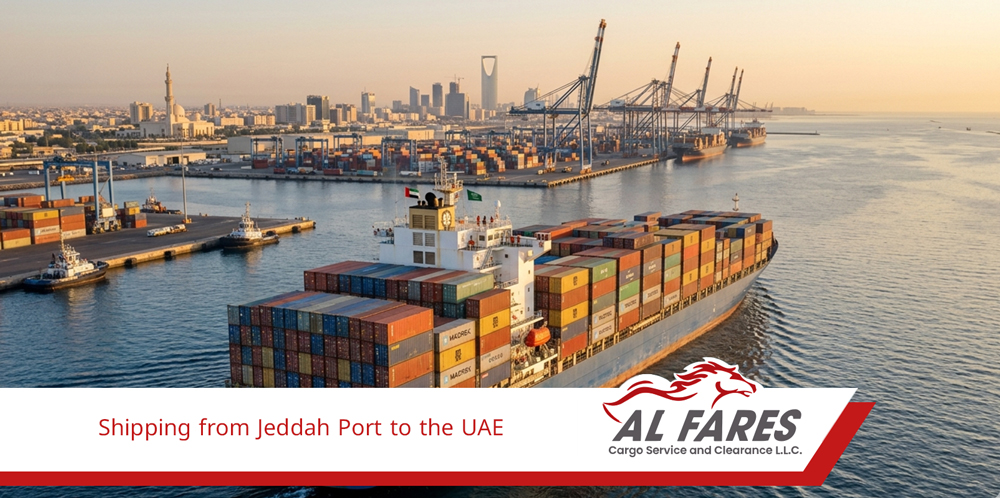
Amid these developments, a clear strategic shift has emerged. Land transportation originating from Jeddah Port has become one of the most effective alternative solutions—especially within the Sea–Land multimodal model. In this approach, shipments are received via the Red Sea and then transported overland through Saudi Arabia’s road network to the UAE. This shift is no longer just a temporary tactical option; it has evolved into a strategic direction driven by the need to reduce risks and diversify supply channels.
The importance of this route lies in its ability to bypass traditional bottlenecks while offering greater control over logistics operations whether in scheduling, tracking, or risk management. Additionally, it benefits from Saudi Arabia’s advanced infrastructure, which has seen major investments in highways and border crossings, making land transport more efficient and capable of meeting growing demand.
Direct Impact on Saudi Arabia and the UAE Amid Current Events
Recent events have had direct and tangible impacts on shipping activity and supply chains in both Saudi Arabia and the UAE, forcing rapid and practical adjustments in logistics priorities.
In Saudi Arabia:
The impact has been evident in the slowdown and partial disruption of maritime shipping to key ports such as Jeddah Islamic Port and King Abdulaziz Port in Dammam. This disruption is mainly due to unstable shipping routes and the rescheduling of maritime services. While not a complete halt, it has resulted in noticeable delays and increased operational costs.
In response, logistics operators in Saudi Arabia have quickly adapted by increasing reliance on domestic alternatives most notably land transportation. Overland corridors now play a central role in moving goods from Red Sea ports to various regions within the Kingdom, and subsequently toward GCC countries. Additionally, demand for warehousing and domestic distribution services has increased to absorb disruptions and maintain the steady flow of goods.
In the UAE:
The impact has been more closely tied to regional redistribution activities. Major ports such as Jebel Ali have experienced reduced efficiency due to delays in container arrivals and disruptions in certain shipping lines. As one of the region’s largest re-export hubs, even minor disruptions quickly ripple through its supply chains.
As a result, pressure has increased significantly on ports located outside high-risk areas, such as Fujairah and Khorfakkan. These ports have become alternative entry points for shipments. While this shift has increased operational load and created capacity challenges, it has also highlighted their importance as part of a broader logistics diversification strategy.
Jeddah–UAE Corridor: Why Has It Become Critical?
1. Strategic Location of Jeddah Port
Jeddah Islamic Port’s location on the Red Sea provides a strong geographical advantage, making it less exposed to high-risk zones compared to other regional ports.
Key advantages:
- Located on a major global trade route linking Asia, Europe, and Africa
- Relatively far from Gulf tension zones
- Handles large volumes of containers and cargo
- Serves as a major redistribution hub for GCC markets
2. Integration with Saudi Arabia’s Modern Road Network
Saudi Arabia has heavily invested in infrastructure, improving connectivity between ports and inland cities.
Key benefits:
- Direct highway connection between Jeddah and Riyadh
- Infrastructure designed for heavy trucking
- Reduced inland transit time
- Integrated logistics support (stations, warehouses, distribution centers)
3. Direct Access to the UAE via Efficient Land Routes
This corridor enables direct cargo movement from western Saudi Arabia to the UAE without additional sea routes.
Key advantages:
- Direct overland route connecting Jeddah to the UAE
- Fewer handling and transit points
- Faster delivery compared to some alternatives
- Easier scheduling of trucking operations
4. Riyadh–Al Batha Route as a Core Corridor
The Riyadh–Al Batha corridor acts as the backbone of this route, linking central Saudi Arabia with the UAE border.
Key features:
- Connects Riyadh to the UAE border crossing
- One of the busiest GCC land freight routes
- Designed to handle heavy commercial traffic
- Ensures continuous truck flow between both countries
5. Government Support and Logistics Initiatives
This corridor is strongly supported by government initiatives aligned with logistics sector development strategies.
Key initiatives:
- Simplified customs procedures and faster clearance
- Upgraded border crossings with higher capacity
- Introduction of “Green Corridor” initiatives for faster freight movement
- Encouragement of investment in logistics and transport sectors
Advantages of Land Freight from Jeddah to the UAE
1. Reduced Dependence on Maritime Routes
Amid ongoing logistics disruptions, reducing reliance on traditional sea routes has become a strategic priority for companies aiming to minimize risks and ensure business continuity. Land freight from Jeddah Islamic Port provides a practical alternative that limits exposure to maritime uncertainties.
Key benefits include:
- Avoiding delays caused by port congestion
- Reducing risks associated with changing shipping routes
- Greater stability in shipping schedules
- Less dependence on sensitive maritime transit points
2. Greater Delivery Flexibility
Land transportation offers a high level of flexibility compared to sea freight, allowing routes and schedules to be easily adjusted based on customer needs or operational conditions.
This flexibility enables:
- The ability to reroute shipments during transit
- Daily or on-demand scheduling
- Efficient handling of urgent shipments
- Flexible selection of final delivery points within the UAE
3. Faster Transit Compared to Alternative Routes
When compared to long or indirect maritime routes, land freight provides a clear advantage in transit time especially when rerouting shipments or avoiding congested sea lanes.
This results in:
- Reduced overall transit time
- Less waiting time at ports
- Faster delivery for urgent or sensitive cargo
- Higher efficiency in integrated logistics operations
4. Real-Time Tracking and Shipment Control
One of the key advantages of land freight is the ability to monitor and control shipments in real time, enhancing transparency and reducing operational risks.
Key features include:
- Live shipment tracking via GPS systems
- Instant status updates
- Rapid response to delays or disruptions
- Improved inventory and supply chain management
Tips for Importers and Exporters
1. Choose a Reliable Shipping Partner
Selecting the right logistics provider is one of the most critical decisions affecting supply chain performance. Partnering with an experienced company like AlFares helps minimize operational risks and ensures timely delivery especially under current market conditions.
Key considerations:
- Proven experience in regional routes (Saudi Arabia – UAE)
- Strong track record of reliability and on-time delivery
- Availability of integrated services (transport, customs clearance, warehousing)
- Professional support team capable of handling emergencies
2. Plan Ahead to Reduce Costs
Advance planning plays a crucial role in controlling shipping costs. Companies like AlFares provide smart logistics solutions that help clients schedule shipments efficiently and avoid unexpected price increases.
Best practices include:
- Booking shipments in advance to avoid rate increases
- Choosing optimal shipping periods (avoiding peak seasons)
- Consolidating shipments to reduce costs
- Evaluating different options (land, sea, multimodal)
3. Continuously Monitor Shipments
Close shipment monitoring is essential in today’s dynamic supply chain environment. AlFares offers advanced tracking systems that give clients full visibility at every stage.
Recommendations:
- Use real-time tracking systems
- Receive continuous shipment updates
- Respond quickly to any delays or route changes
- Improve internal planning based on shipment status
4. Leverage Multimodal Solutions
Using a combination of transport modes has become one of the most effective logistics strategies in 2026. AlFares provides integrated solutions that combine sea and land freight to maximize efficiency.
Key advantages:
- Reduced risk through diversified transport methods
- Selecting the most suitable route based on cargo type and conditions
- Optimizing delivery time by structuring transport stages effectively
- Greater flexibility in handling unexpected changes