
 Track Your Shipment
 Online Enquiry
 Sign In
 English
 Alfares Cargo
 Logistic Informations
 2026-06-22
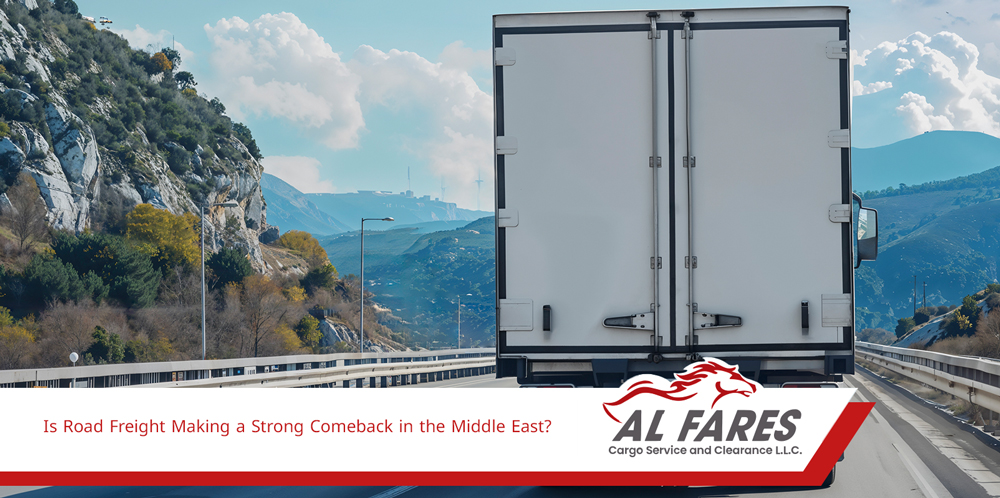
Amid the rapid transformations taking place in the global transport and logistics sector, road freight in the Middle East is once again stepping into the spotlight this time not as a limited traditional option, but as a strategic alternative gaining serious reconsideration. The question today is no longer whether road freight can be relied upon, but rather: to what extent can it shape the future of supply chains in the region?
What distinguishes the current phase is that interest in road freight is no longer just a temporary reaction to crises. Instead, it has become part of a broader strategic shift toward diversifying transportation methods and reducing dependence on traditional routes. With the rehabilitation of international highways, reopening of border crossings, and ongoing infrastructure development, the region is witnessing a genuine revival in land transport connecting the Gulf with the Levant and Turkey, all the way to Europe.
While maritime shipping has dominated for decades due to its cost efficiency and capacity for large volumes, current challenges have rebalanced the equation. Road freight is regaining ground, supported by speed, flexibility, and adaptability. This resurgence raises deeper questions about the future of logistics in the Middle East—and whether we are entering a long-term transformation that will reshape regional trade.
Historical Context: Why Did Road Freight Decline?
Despite the Middle East’s strategic geographic position naturally serving as a land bridge between Asia, Europe, and Africa road freight has not maintained its historical momentum. Instead, it experienced a noticeable decline over past decades in favor of maritime transport. This shift was not driven by a single factor, but rather by a combination of political, security, and logistical challenges.
One of the primary reasons was the political and security instability in key transit countries such as Syria and Iraq. Prolonged conflicts led to the closure or disruption of critical international routes linking the Gulf with the Levant and Turkey. These disruptions not only affected cargo flows but also weakened trust in road transport as a reliable option.
Meanwhile, maritime shipping strengthened its position as a safer and more stable alternative, particularly with heavy reliance on strategic routes like the Suez Canal, which became a vital artery for global trade. As ports modernized and shipping lines improved efficiency, sea freight became the preferred option for transporting large volumes at lower costs despite longer transit times.
Additionally, road freight faced administrative and logistical challenges, including complex customs procedures and varying regulations between countries. These factors caused delays and increased operational costs. The lack of effective regional coordination, along with insufficient infrastructure in some countries, further reduced its competitiveness.
Geopolitical Shifts Reshaping the Landscape
The Middle East is currently undergoing rapid geopolitical changes that are directly impacting the logistics sector and redrawing trade routes especially land corridors. These shifts are driven by intertwined political, economic, and security factors, pushing countries to rethink how they secure supply chains and reduce reliance on traditional routes.
Reopening Land Corridors Between Turkey, Syria, and Jordan
After years of disruption, several key land routes are gradually reopening. This marks a significant shift in regional transport. The return of these corridors not only restores truck movement but also reflects improving coordination between countries.
This development enables direct connectivity between Turkish and Gulf markets through Syria and Jordan, significantly reducing transit times compared to sea routes and offering businesses faster, more flexible shipping options.
Regional Efforts to Link the Gulf with Europe via Land Routes
In response to challenges facing maritime transport, countries in the region are investing in ambitious projects to establish land corridors connecting the Gulf with Europe. These initiatives include modern highways and railway networks.
The goal is to create strategic alternatives that reduce dependency on congested sea routes, while enhancing the Middle East’s position as a global logistics hub rather than merely a transit region.
Iraq’s Push to Reclaim Its Strategic Role
Iraq is actively working to restore its historical role as a key land corridor linking the Gulf with Turkey and Europe. This includes major infrastructure projects, improved road security, and streamlined customs procedures.
These efforts are particularly significant amid disruptions in maritime routes. Iraq has the potential to offer an efficient land alternative that shortens distances and strengthens regional trade positioning itself as a major logistics hub in the coming years.
Egypt’s Development of Integrated Transport Networks
Egypt is strengthening its role as a global logistics center by developing transport networks connecting the Red Sea and the Mediterranean. This includes upgrading road infrastructure and investing in modern railway systems linking ports with industrial zones.
This strategy not only supports domestic trade but also offers alternative logistics solutions that can complement or in some cases compete with the Suez Canal, particularly when faster or more flexible options are needed.
Key Advantages of Road Freight Today
With rapid changes in the global trade environment, road freight is emerging as a strong and flexible option especially in the Middle East. It is no longer just a backup solution but, in many cases, the most efficient choice.
Faster Transit Times
One of the biggest advantages of road freight is speed especially for regional shipments. Instead of waiting weeks for sea freight, trucks can deliver goods between countries in just a few days.
This is crucial for industries that depend on fast supply chains, such as fashion, food, and electronics, where shorter transit times enhance competitiveness and reduce storage costs.
Greater Flexibility During Crises
In times of disruption affecting ports or sea routes, road freight provides multiple alternatives that can be quickly adjusted. Trucks can be rerouted easily, avoiding affected areas.
This flexibility makes road freight a preferred option during instability, ensuring continuity of supply chains with minimal disruption.
Competitive Costs on Certain Routes
Although sea freight is traditionally known for lower costs, road freight is becoming increasingly competitive especially with rising maritime costs and port delays.
With efficient infrastructure and direct routes, road freight can reduce total costs when factoring in delivery speed, reduced storage needs, and faster inventory turnover.
Boosting Regional Trade
Road freight plays a key role in strengthening intra-regional trade by facilitating cross-border movement of goods and encouraging businesses to expand into neighboring markets.
It supports not only large shipments but also small and medium cargo, opening opportunities for startups and traders to scale efficiently.
Al Fares’ Role in Advancing Modern Road Freight in the Middle East
As road freight gains strategic importance, Al Fares plays a vital role in delivering advanced logistics solutions aligned with this transformation:

1. Extensive Land Transport Network
Al Fares operates a strong network connecting the Gulf, the Levant, and Turkey—leveraging reopened trade corridors.
Benefits include:
- Multiple route options
- Reduced transit times
- High adaptability to sudden changes
2. Comprehensive Door-to-Door Services
From pickup to final delivery, Al Fares provides fully integrated logistics solutions without requiring multiple intermediaries.
Key advantages:
- Simplified operations
- Time and effort savings
- Seamless supply chain management
3. Advanced Tracking Systems
The company uses modern tracking technologies that allow real-time shipment monitoring.
What this offers:
- Full visibility at all times
- Reduced customer uncertainty
- Better planning and responsiveness
4. Strong Customs Clearance Expertise
Customs procedures are one of the biggest challenges in road freight. Al Fares’ expertise ensures smooth handling across different countries.
Key strengths:
- Faster border clearance
- Reduced delays
- Avoidance of errors and penalties
5. Diverse Fleet for All Needs
Al Fares operates a fleet capable of handling various types of cargo.
Capabilities include:
- General and commercial goods
- Sensitive or perishable shipments
- Industry-specific requirements
6. Continuous Customer Support
Beyond transportation, Al Fares provides advisory support to help clients choose the best logistics solutions.
Support includes:
- Route optimization
- Road vs. sea freight comparisons
- Market adaptation strategies
To read more about land freight click here
To read more Useful information in cargo field click here