
 Track Your Shipment
 Online Enquiry
 Sign In
 English
 Alfares Cargo
 Logistic Informations
 2026-03-16
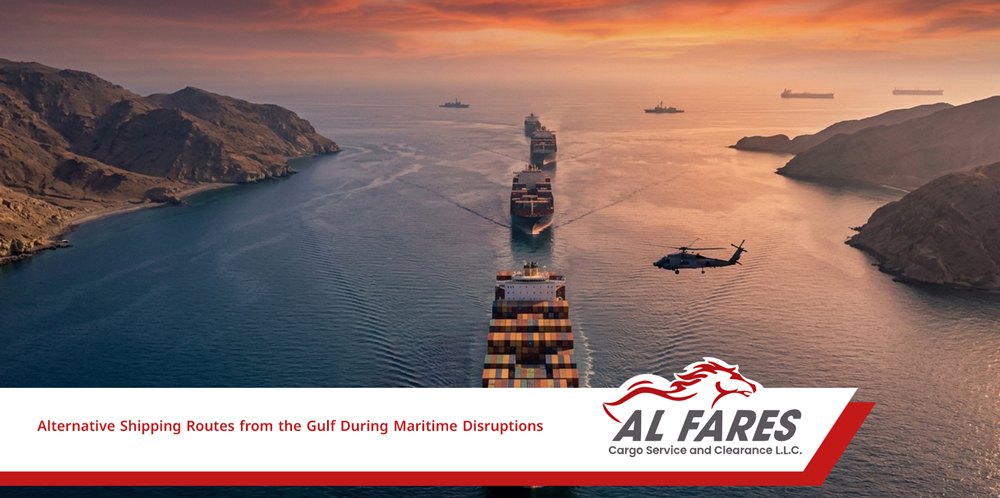
With rising geopolitical tensions in the Gulf region in 2026 due to the ongoing conflict with Iran, maritime shipping routes in the Middle East have started to face serious challenges. Security threats and maritime incidents have affected navigation across several critical shipping lanes, particularly the Strait of Hormuz, one of the world's most important maritime passages for global trade.
A significant portion of global oil exports and commercial cargo passes through this strategic corridor every day. As tensions increase, shipping companies are reassessing their maritime routes, which has resulted in shipping delays, increased freight costs, and higher marine insurance premiums.
For traders, importers, and logistics companies operating in the region, finding alternative shipping routes from the Gulf has become essential. Identifying alternative ports and logistics solutions can help reduce risk and maintain the continuous flow of international trade even during periods of instability.
Why Businesses Are Searching for Alternative Gulf Ports
During periods of geopolitical instability, relying on a single maritime route or a primary port can pose significant risks to supply chains. As tensions in the Gulf escalate, many traders and logistics companies are actively exploring alternative ports in the Middle East to ensure uninterrupted cargo movement.
One of the main concerns is the possibility of disruptions in major maritime passages such as the Strait of Hormuz, which connects the Persian Gulf to the Gulf of Oman and the Indian Ocean. In times of conflict or heightened security risks, ships may face delays, additional inspections, rerouting, or restricted access to certain waters.
These disruptions can significantly increase shipping transit times and operational costs, affecting both importers and exporters.
Another major factor is the rising cost of marine insurance. Insurance providers often increase war-risk premiums when a region becomes unstable. As a result, shipping through high-risk areas becomes more expensive, encouraging traders to choose alternative ports or longer but safer maritime routes.
For businesses involved in international trade, delivery reliability is critical. Delays in cargo arrival can lead to financial losses, disrupted supply chains, and dissatisfied clients. For this reason, alternative ports and flexible logistics strategies are becoming an important part of modern supply chain risk management.
Major Alternative Ports for Shipping in the Gulf Region
Khorfakkan Port – A Strategic Shipping Hub
One of the most important alternative ports currently used by shipping companies is Khorfakkan Port in the United Arab Emirates.
Located on the Gulf of Oman on the UAE’s eastern coast, Khorfakkan offers a strategic advantage because vessels can reach the port without necessarily entering the Persian Gulf through the Strait of Hormuz.
This makes Khorfakkan particularly valuable during times of geopolitical tension.
Ships arriving from the Indian Ocean, Asia, or the Arabian Sea can access the port directly, reducing exposure to sensitive maritime routes. The port also features modern container terminals and advanced logistics infrastructure, capable of handling some of the largest cargo vessels in the world.
Khorfakkan plays a major role in transshipment operations, allowing cargo to be transferred and distributed to other regional ports efficiently.
In addition, the port is well connected to the UAE’s economic centers such as Dubai and Sharjah through a modern highway network, enabling fast cargo transportation and re-export operations.
Sohar Port – A Growing Logistics Gateway in Oman
Another important alternative port is Sohar Port in the Sultanate of Oman, which has gained increasing attention during recent maritime disruptions.
Sohar is located on the Gulf of Oman outside the Strait of Hormuz, giving it a major geographical advantage. Ships can reach the port without navigating through the most sensitive areas of the Persian Gulf.
Over the past decade, Sohar has developed into a major industrial and logistics hub. The port includes large industrial zones and specialized terminals for containers, general cargo, and bulk commodities.
These developments have positioned Sohar as a strong alternative for shipping companies looking for secure and efficient logistics routes in the Middle East.
The port also serves as an important trade connection between Gulf markets, Asia, and East Africa, strengthening its role as a strategic logistics gateway for regional trade.
Air Freight as a Temporary Alternative During Shipping Disruptions
When maritime shipping routes are affected by geopolitical tensions, many companies temporarily shift to air freight solutions to maintain supply chain continuity.
Although air cargo is significantly more expensive than sea freight, it provides unmatched speed and avoids maritime risks that may affect shipping lanes in the Gulf region.
Air freight becomes particularly valuable for high-value and time-sensitive shipments, including:
- Electronics
- Industrial spare parts
- Pharmaceuticals
- Urgent commercial goods
Instead of waiting for vessels to navigate uncertain maritime routes, cargo can be transported quickly to major airports such as Dubai International Airport or other regional cargo hubs, and then distributed to final markets.
Gulf airports are equipped with advanced cargo facilities and logistics infrastructure, enabling them to handle large volumes of air freight during periods when maritime shipping is disrupted.
While air freight cannot fully replace sea freight due to capacity limitations and higher costs, it remains an effective short-term logistics solution during shipping crises.