
 Track Your Shipment
 Online Enquiry
 Sign In
 English
 Alfares Cargo
 Logistic Informations
 2026-03-11
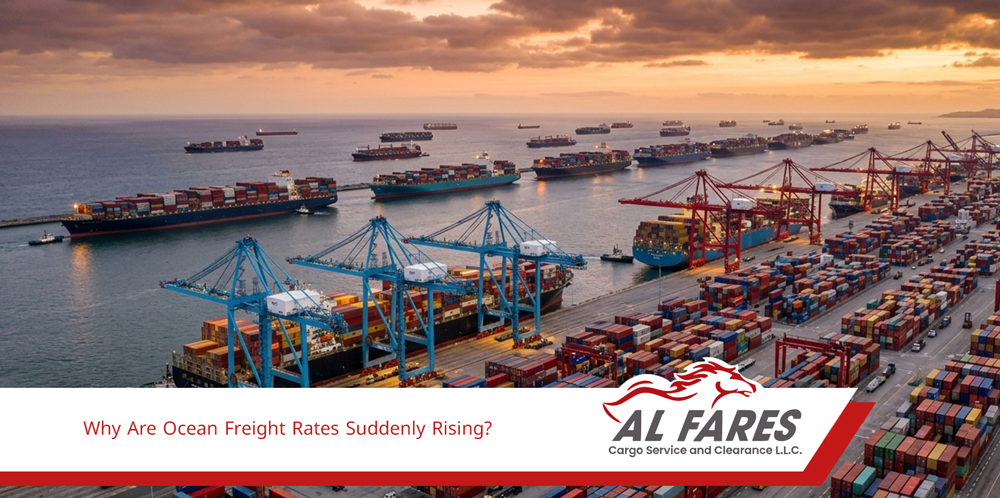
In recent months, the maritime shipping industry in the Middle East has experienced a noticeable surge in costs amid escalating geopolitical tensions linked to the Iranian situation in the Gulf. These developments have directly impacted vessel traffic in one of the world’s most critical maritime corridors the Strait of Hormuz.
The Strait of Hormuz is a vital artery for global trade, carrying large volumes of oil and cargo between Asia and Europe. As a result, any security disruption in this narrow passage can quickly influence international shipping costs and global supply chains.
With risks increasing in the region, many shipping companies have begun reassessing their maritime routes. At the same time, global insurance providers have raised war risk insurance premiums for vessels sailing near conflict zones. This has led to a direct increase in voyage costs, which ultimately affects traders and importers through higher freight rates.
Additionally, rerouting vessels to avoid high-risk areas has increased transit times and fuel consumption. Some shipping lines have also introduced security-related surcharges to offset the elevated operational risks.
In this article, we explore the main reasons behind the sudden increase in ocean freight rates in the Middle East and examine the role of global insurance companies and geopolitical tensions in reshaping maritime transport costs.
Key Reasons Behind the Sudden Rise in Ocean Freight Rates
1. Military Escalation in the Gulf and Its Direct Impact on Shipping
The Gulf region is one of the most important maritime corridors in the world, handling a significant share of global energy shipments and international cargo.
With growing military tensions linked to the Iranian crisis, maritime navigation in the region has become increasingly complex and risky. This situation is particularly sensitive due to the strategic importance of the Strait of Hormuz, which serves as the primary gateway for oil and goods exported from the Gulf to global markets.
The Strait of Hormuz Crisis and Its Impact on Vessel Traffic
As tensions escalate, passage through the Strait of Hormuz has become riskier for commercial vessels and oil tankers. This has resulted in several direct consequences for maritime traffic, including:
- The potential closure or partial disruption of the strait due to military activity or stricter security procedures.
- Increased security risks for commercial vessels and oil tankers, including threats or attacks in transit zones.
- A decline in the number of vessels transiting the strait due to concerns among shipping companies about operating in high-risk areas.
- Delays caused by inspections or longer waiting times before vessels are allowed to pass.
- Congestion of ships at nearby ports awaiting improved security conditions or updated instructions from shipping companies.
- Diversion or detention of certain vessels due to escalating regional security risks.
All these factors disrupt maritime logistics, place pressure on global supply chains, and ultimately drive freight prices higher.
2. Rerouting Ships to Longer and More Expensive Routes
When security risks rise in major maritime regions, global shipping companies often alter their vessel routes to avoid conflict zones.
This has led to significant changes in international shipping routes, including:
- Avoiding passage through parts of the Gulf or other sensitive maritime corridors in the Middle East.
- Choosing longer alternative routes to ensure the safety of vessels and crew.
- Redirecting ships via alternative paths such as sailing around the Cape of Good Hope in South Africa rather than using traditional routes.
Such changes can increase voyage times significantly, sometimes adding 10 days to three weeks to certain shipping routes.
As a result:
- Fuel consumption increases due to longer travel distances.
- Operational and maintenance costs rise because vessels spend more time at sea.
- Pressure on global shipping fleets increases due to longer vessel deployment cycles.
Economic Factors Driving Higher Maritime Shipping Costs
Economic factors also play a major role in rising freight costs in the Middle East. Maritime transport relies on a wide range of operational elements including fuel prices, vessel availability, and daily operating costs all of which are directly influenced by geopolitical instability.
When these economic pressures coincide with military tensions in strategic maritime corridors such as the Strait of Hormuz, the result is often a rapid and noticeable increase in global freight rates.
1. Rising Marine Fuel Prices
Fuel is one of the largest operating expenses for commercial vessels, representing a significant portion of total voyage costs.
When tensions escalate in oil-producing regions, global energy prices often increase and the shipping industry feels the impact immediately.
Major consequences include:
- Higher operating costs due to increased marine fuel prices.
- Greater financial pressure on shipping lines operating long routes or alternative shipping paths.
- The introduction of fuel surcharges by carriers to compensate for rising energy costs.
- Increased overall costs for transporting containers and cargo by sea.
With longer routes being used to avoid conflict zones, fuel consumption increases further, amplifying the effect on freight prices.
2. Shortage of Ships and Tankers in the Region
During periods of geopolitical instability, many shipowners hesitate to deploy their fleets to regions experiencing military tensions due to elevated risks and insurance costs.
This can lead to a temporary shortage of vessels available for routes passing through the Middle East.
The consequences include:
- Reduced shipping capacity on certain maritime routes.
- Increased demand for available vessels compared to supply.
- Higher charter rates for commercial vessels and oil tankers.
- Delays in shipments due to limited vessel availability.
This imbalance between supply and demand in maritime transport markets naturally results in higher freight costs, especially during periods of strong global trade activity.
3. Additional Surcharges Imposed by Shipping Lines
As operational costs and security risks rise, shipping companies often introduce additional fees to offset these pressures.
In the shipping industry, these are commonly referred to as surcharges or emergency fees.
Examples include:
- War risk surcharges for vessels operating near conflict zones.
- Fuel surcharges to compensate for higher energy prices.
- Route deviation fees when ships must sail along longer alternative paths.
- Operational emergency charges imposed by carriers due to exceptional circumstances.
These additional costs are usually added to the base freight rate, ultimately increasing the final price paid by importers and exporters.
The Role of Global Insurance Companies in Maritime Shipping
Insurance companies play a crucial role in the maritime shipping industry. Comprehensive insurance coverage is essential for vessels to operate, as it protects against a wide range of risks from routine maritime incidents to war and terrorism-related threats.
With rising tensions in the Middle East, particularly around the Strait of Hormuz, insurance companies now have an even greater influence on shipping operations and costs.
1. Increased Insurance Premiums
When a region is classified as a high-risk or conflict zone, insurers impose additional premiums known as war risk insurance.
This results in:
- Higher costs for each maritime voyage.
- Additional charges passed on to customers.
- Increased shipping prices for both oil tankers and container vessels.
- Reassessment of freight contract pricing by shipping companies.
2. Reduced or Cancelled Insurance Coverage
In cases of severe military escalation, insurance providers may reduce or withdraw coverage for certain regions.
This directly affects shipping operations because:
- Uninsured vessels cannot safely transit high-risk maritime corridors.
- Shipping lines may suspend routes or divert vessels.
- Companies may impose higher charges to compensate for increased risk exposure.
- Some vessels may be restricted from entering specific ports until adequate coverage is secured.
3. Operational Restrictions and Safe Route Requirements
Insurance companies may also impose operational conditions on shipping companies, including:
- Strict operational requirements for vessels traveling through conflict zones.
- Mandatory use of safer alternative routes.
- Adjustments to shipping schedules due to insurance restrictions.
- Encouragement of alternative ports and logistics hubs outside conflict areas.
Strategic Impact on the Global Shipping Industry
It is clear that insurance companies are not merely third-party risk providers they are strategic stakeholders influencing major decisions in global shipping.
Higher premiums and stricter coverage conditions directly impact freight rates worldwide. Insurance restrictions may force shipping companies to alter routes, reduce voyages, or relocate logistics operations, placing additional pressure on global supply chains.
As a result, security escalations in critical maritime regions do not only increase operational risks but also significantly influence the cost structure of global shipping.
How the Global Shipping Industry Responds to Maritime Crises
During military or political crises, shipping companies quickly reorganize their operations to minimize disruptions and protect global supply chains.
Key strategies include:
1. Rerouting Ships Away from Conflict Zones
Shipping companies often adjust maritime routes to avoid high-risk areas, even if alternative routes are longer.
2. Reducing Voyages to High-Risk Regions
Carriers may temporarily reduce the number of ships operating in unstable regions until security conditions improve.
3. Strengthening Cooperation with Insurers and Maritime Authorities
Shipping companies coordinate closely with insurers and international maritime organizations to manage evolving risks.
4. Using Alternative Ports and Logistics Hubs
Carriers may rely on alternative ports or regional logistics hubs to bypass congestion or reduce exposure to conflict zones.
These strategies help maintain the flow of global trade while managing operational risks during periods of geopolitical instability.