
 Track Your Shipment
 Online Enquiry
 Sign In
 English
 Alfares Cargo
 Logistic Informations
 2026-10-22
A Guide for Traders to Avoid Shipment Delays
The Gulf region has recently witnessed a noticeable escalation in military tensions related to the conflict with Iran. These developments have quickly impacted on the maritime shipping sector and international trade. The region is not merely a regional transit route; it is one of the world's most vital arteries for global trade and energy transportation. As a result, any instability in the area directly affects cargo movement and global supply chains.
These developments have led to significant disruptions in maritime shipping activities. Hundreds of commercial vessels that typically transit through the region daily have been affected, either through delays in passage or extended waiting times due to heightened security procedures. Additionally, marine insurance premiums have risen considerably as some Gulf areas have been classified as high-risk zones. This increase has consequently affected shipping costs and global commodity prices.
For traders, importers, and exporters, such disruptions do not only mean delayed shipments. In many cases, they can also lead to complete supply chain interruptions, particularly in industries that rely on rapid delivery such as electronics, food products, and consumer goods. Therefore, many stakeholders in international trade have begun searching for alternative solutions to ensure the continued flow of goods while minimizing potential risks.
In this article, we present a comprehensive guide to the most important alternative ports for international shipping in the Gulf region, along with key recommendations that traders should follow to avoid shipment delays.
Key Alternative Ports for International Shipping in the Gulf
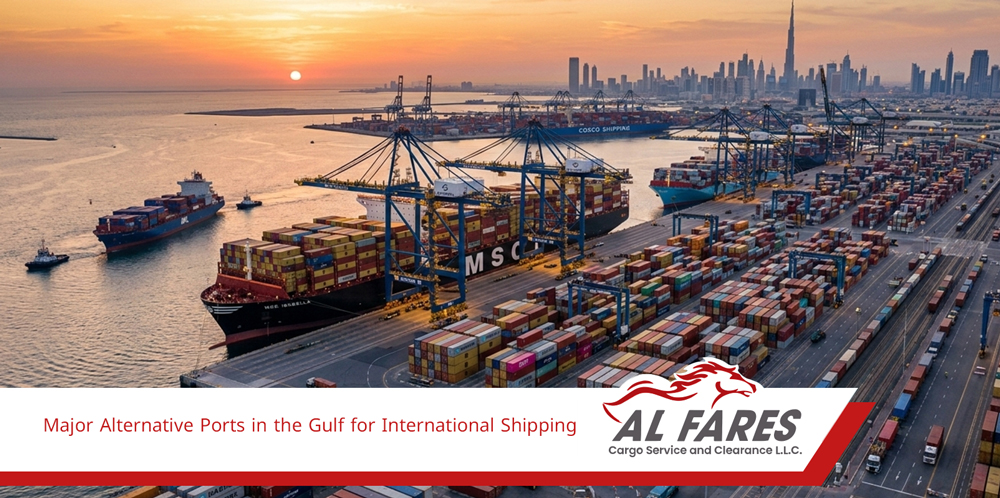
As mentioned earlier, with rising military tensions in the region and increased risks associated with navigation through the Strait of Hormuz, traders and shipping companies have started searching for alternative ports that allow trade flows to continue without significant delays or security concerns.
Several ports across the Gulf, the Arabian Sea, and the Red Sea have emerged as strategic alternatives capable of playing a vital role in rerouting international shipping routes.
1. Fujairah Port – United Arab Emirates
Fujairah Port is considered one of the most important alternative ports in the region due to its strategic location on the Gulf of Oman, outside the Strait of Hormuz. This location gives it a major advantage compared to ports located inside the Arabian Gulf, as vessels can access it without passing through the most sensitive maritime chokepoints.
The port is also connected to the UAE's energy infrastructure through the Habshan–Fujairah pipeline, which transports crude oil directly from Abu Dhabi's oil fields to the eastern coast, bypassing the Strait of Hormuz entirely. This pipeline gives Fujairah a significant strategic role in global energy trade.
Fujairah Port provides a wide range of logistics services, including:
- Exporting oil and petroleum products
- Handling containers and general cargo
- Re-export and storage operations
While its container handling capacity is under one million TEUs annually, it is one of the world's most important hubs for oil storage and marine fuel bunkering, making it a preferred option for many traders seeking stability and security compared to ports located inside the Gulf.
2. Khorfakkan Port – United Arab Emirates
Khorfakkan Port is also located on the Gulf of Oman, placing it outside the mandatory transit route through the Strait of Hormuz. It is considered one of the most significant container transshipment hubs in the Middle East.
The port has an operational capacity of approximately 5 million containers annually, making it one of the region’s largest transshipment ports. It serves as a key connection point for shipping routes linking Asia, Europe, and Africa.
Many global shipping lines use Khorfakkan as a redistribution hub to transfer containers to various Gulf ports. The port also offers a fully integrated customs zone and advanced logistics services that allow cargo to be quickly redirected to Gulf markets.
Although transporting cargo from Khorfakkan to certain UAE cities may require longer inland trucking distances, its secure location makes it a crucial alternative during geopolitical crises.
3. Sohar Port – Sultanate of Oman
Sohar Port has rapidly become one of the fastest-growing ports in the region and serves as a key logistics gateway connecting the Gulf with Asia and Europe.
Key advantages include:
- Close proximity to the UAE, facilitating easy land transport
- Competitive port handling fees compared to some regional ports
- A large integrated industrial free zone connected to the port
- Ideal for commercial cargo and re-export operations
Many logistics companies increasingly rely on Sohar as an alternative solution when UAE ports experience congestion.
4. Salalah Port – Sultanate of Oman
Salalah Port is one of the most important transshipment ports in the Middle East and the Indian Ocean. Its location near major global shipping lanes between Asia and Europe makes it an ideal hub for cargo redistribution.
The port has undergone major expansions, increasing its capacity to approximately 6 million containers annually, making it one of the most efficient ports in the region.
Salalah offers advanced logistics services including storage, transshipment, and integrated supply chain solutions. It is also connected to modern road networks linking it with Gulf countries, allowing goods to be transported inland to regional markets.
Increasingly, the port is being used as a redistribution hub for cargo destined for the Gulf, East Africa, and India.
5. Duqm Port – Sultanate of Oman
Duqm Port has emerged in recent years as an ambitious logistics project within the Duqm Special Economic Zone.
Located on the Arabian Sea outside the Strait of Hormuz, the port offers large expansion capabilities and is positioned to become a future regional logistics hub.
Its capacity is around 1.5 million containers annually, with infrastructure supporting various cargo types including:
- Container cargo
- General cargo
- Ro-Ro vessels
- Heavy industries and energy projects
The port also includes industrial zones and advanced maritime maintenance facilities, making it particularly attractive for industrial shipments and energy-related projects.
6. Jeddah Islamic Port – Saudi Arabia
Jeddah Islamic Port is one of the most important ports in the Middle East and currently represents a strategic alternative for traders during the current tensions in the Gulf because it is located on the Red Sea, outside the conflict-prone Gulf waters.
Why Jeddah Port is a strong option today
1. Located outside the Gulf
- Situated on the Red Sea rather than inside the Arabian Gulf
- Not directly affected by congestion or risks in the Strait of Hormuz
2. The largest port in Saudi Arabia
- Handles approximately 65–70% of Saudi Arabia’s maritime imports
- Capable of handling mega container vessels
3. Direct global shipping routes
- Major shipping lanes between Asia, Europe, and Africa pass near the Red Sea
- This makes rerouting shipments easier than to some Gulf ports
4. Land transport access to Gulf countries
Cargo arriving in Jeddah can be transported by road to:
- Qatar
- United Arab Emirates
- Kuwait
- Bahrain
7. Yanbu Port – Saudi Arabia
Yanbu Commercial Port is located on the Red Sea coast, placing it completely outside the maritime tensions affecting the Gulf region.
The port holds strategic importance due to its connection with Saudi Arabia's energy infrastructure through the East–West Pipeline (Petroline), which transports oil from the Eastern Province to the Red Sea with a capacity of approximately 5 million barrels per day.
This connection enables the export of oil and petroleum products without passing through the Strait of Hormuz, giving Saudi Arabia strategic flexibility during geopolitical crises.
Additionally, the port allows cargo to be shipped directly to Europe and Mediterranean countries through the Red Sea and the Suez Canal, making Yanbu an attractive alternative for traders seeking to bypass potential risks in Gulf shipping routes.
Practical Tips for Traders and Importers to Avoid Shipment Delays
Below are several practical recommendations that can help traders and importers minimize delays and avoid additional costs during the current circumstances.
1. Choose the Right Port in Advance
Selecting the appropriate port is one of the most important decisions in the shipping process. A port is not just a destination for cargo; it is a key component of supply chain efficiency.
During crises, some ports may experience heavy congestion, security restrictions, or temporary closures. Traders should therefore monitor port conditions regularly through official authorities, shipping lines, and freight forwarding companies.
Using alternative ports outside the Strait of Hormuz—such as Duqm or Salalah in Oman—can significantly reduce risk.
2. Diversify Shipping Routes
Relying on a single transport route can be risky during periods of geopolitical instability. Businesses are therefore advised to diversify their logistics strategies.
This can include combining:
- Sea freight through alternative ports
- Land transportation between Gulf countries
- Air freight for urgent or high-value cargo
For example, goods can be shipped to Saudi Red Sea ports and then transported by truck to other Gulf markets.
3. Plan Ahead and Build Strategic Inventory
Advance planning plays a critical role in managing logistics disruptions.
Companies that rely on urgent shipments often face extremely high costs during crises. It is therefore advisable to increase purchasing volumes and schedule shipments before peak periods or before geopolitical situations worsen.
Maintaining strategic inventory in Gulf markets or in warehouses near ports can also provide companies with the flexibility to absorb shipping delays.
4. Carefully Review Shipping Charges
During geopolitical tensions, shipping companies may introduce additional charges such as:
- War risk surcharges
- Route diversion fees
- Port congestion charges
- Container detention and demurrage fees
Traders should carefully review all shipping terms before confirming bookings and compare offers from multiple logistics providers.
5. Strengthen Logistics Security and Shipment Tracking
Modern technology plays a crucial role in managing shipments and reducing risks.
Container tracking systems using GPS or satellite monitoring allow businesses to track shipments in real time and anticipate potential delays.
Investing in marine insurance that covers war risks or political disruptions is also strongly recommended.
6. Maintain Coordination with Authorities and Logistics Partners
Gulf governments often introduce temporary logistics facilitation measures during crises to maintain trade flows.
Traders should stay informed through:
- Port authorities
- Chambers of commerce
- Customs departments
- Ministries of transport
Working closely with customs brokers and freight forwarders can also help resolve unexpected delays quickly.
7. Split Shipments Across Multiple Ports
Many large companies now adopt a Multi-Port Strategy, distributing shipments across multiple ports instead of relying on a single destination.
Instead of sending all containers to one port that may face delays or closures, shipments are divided across several regional ports. If one port experiences disruption, other parts of the shipment can still arrive through alternative ports.
This strategy increases flexibility and reduces supply chain risks during geopolitical crises.